Customer Lifetime Value

Overview

Considering the value of a customer and its relationship to the value of the firm.

Presented by:
Larry Vincent,
Professor of the Practice of Marketing
Presented to:
GSBA 509
September 16, 2026

CLV

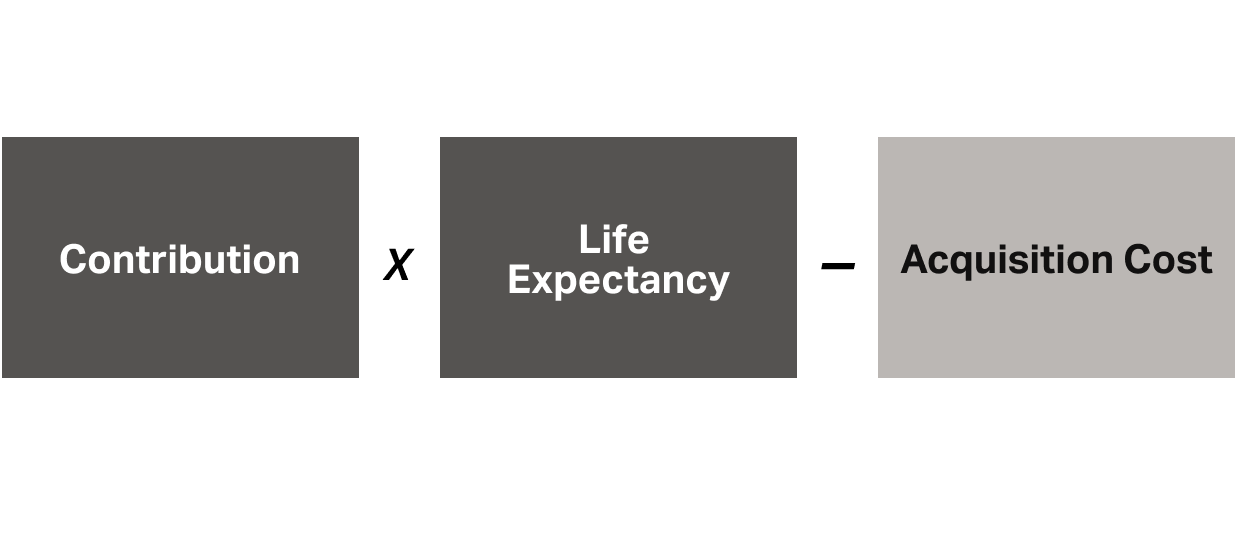
The total net profit a company expects to generate from a customer over the entire relationship, calculated by projecting future purchases and costs while accounting for factors like purchase frequency, retention probability, and the time value of money.

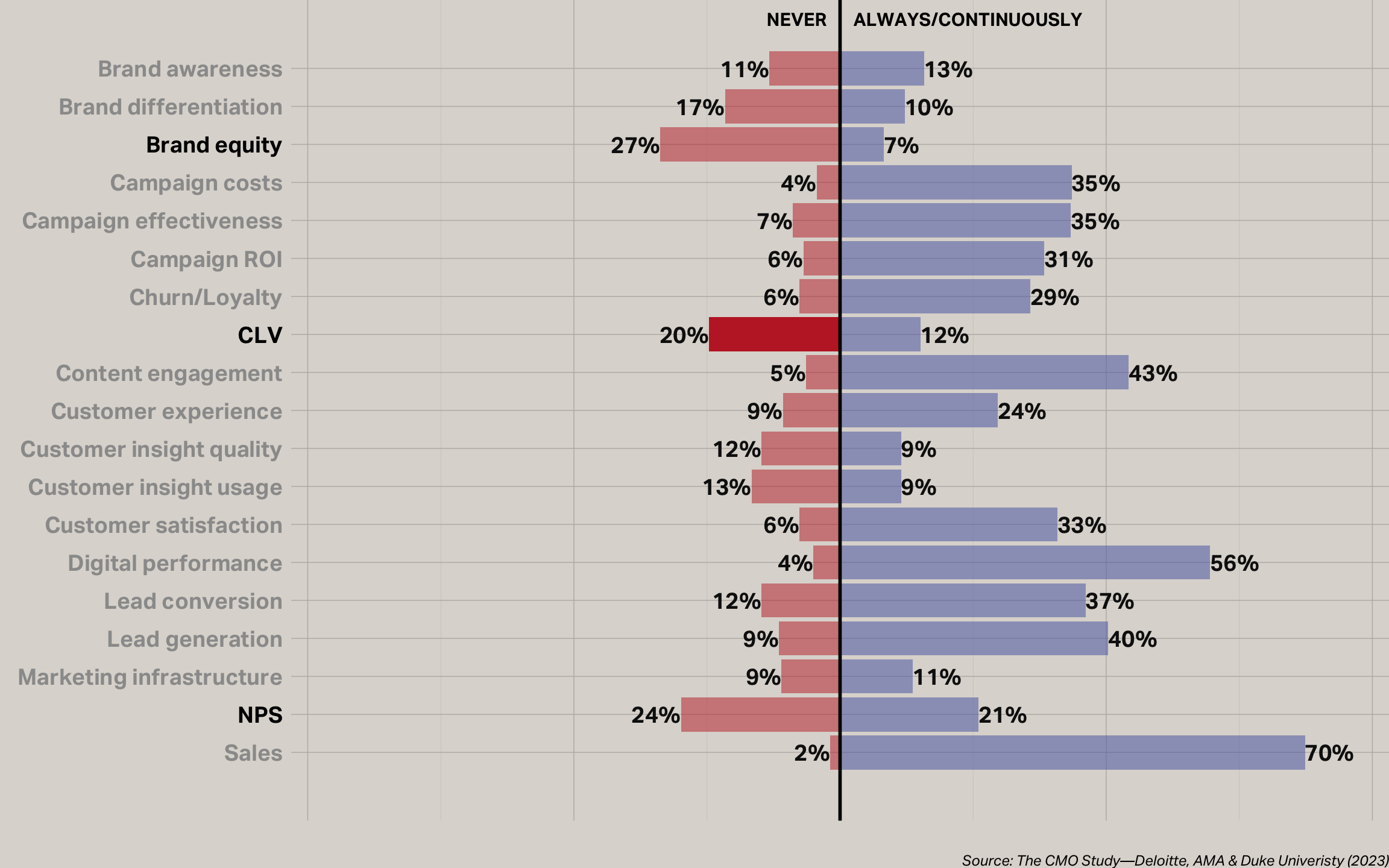
A neglected metric

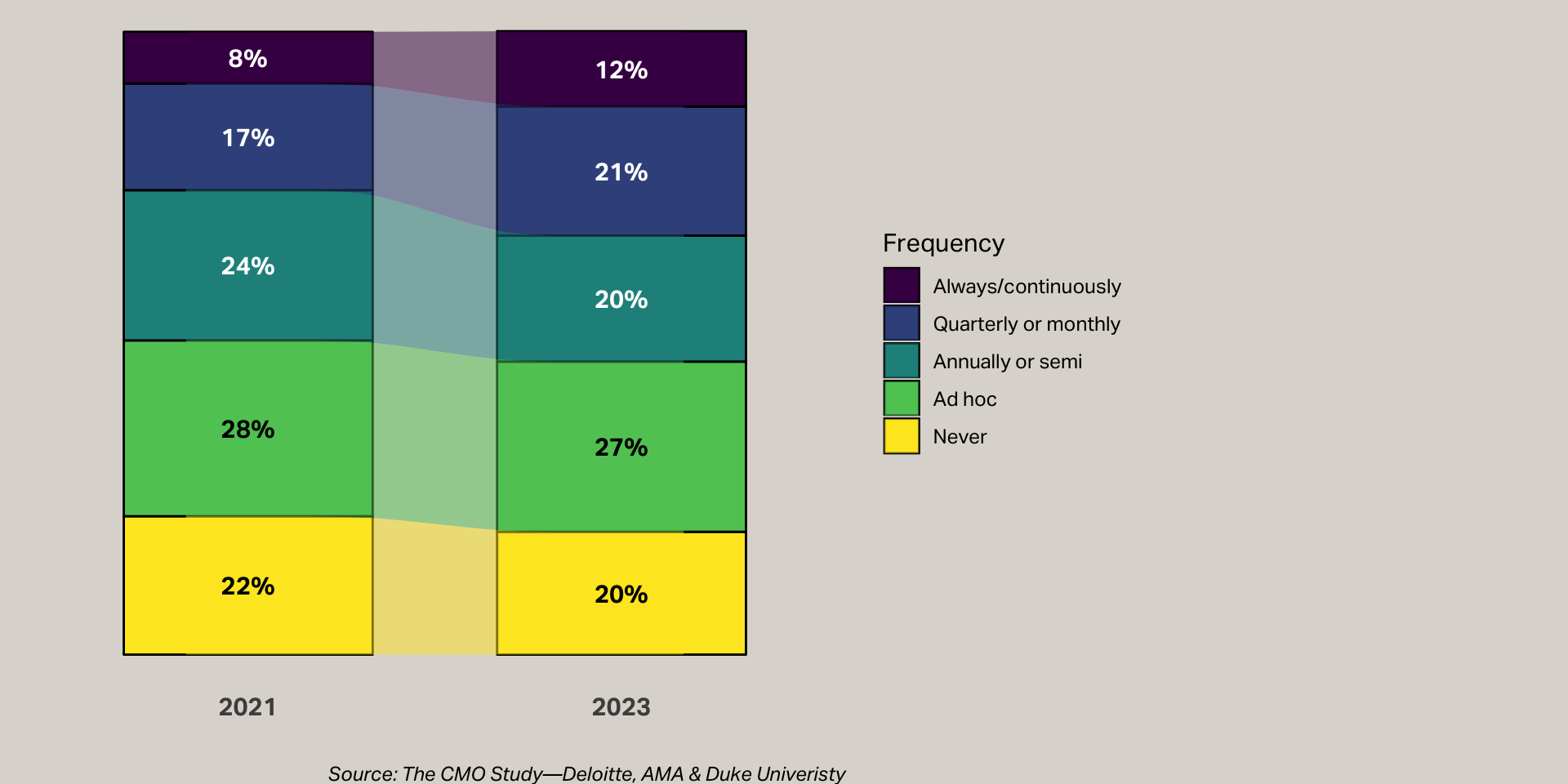
CLV Trend

A third of CMOs in the 2023 study are always or frequently tracking CLV (vs. 25% in 2021)
CRM
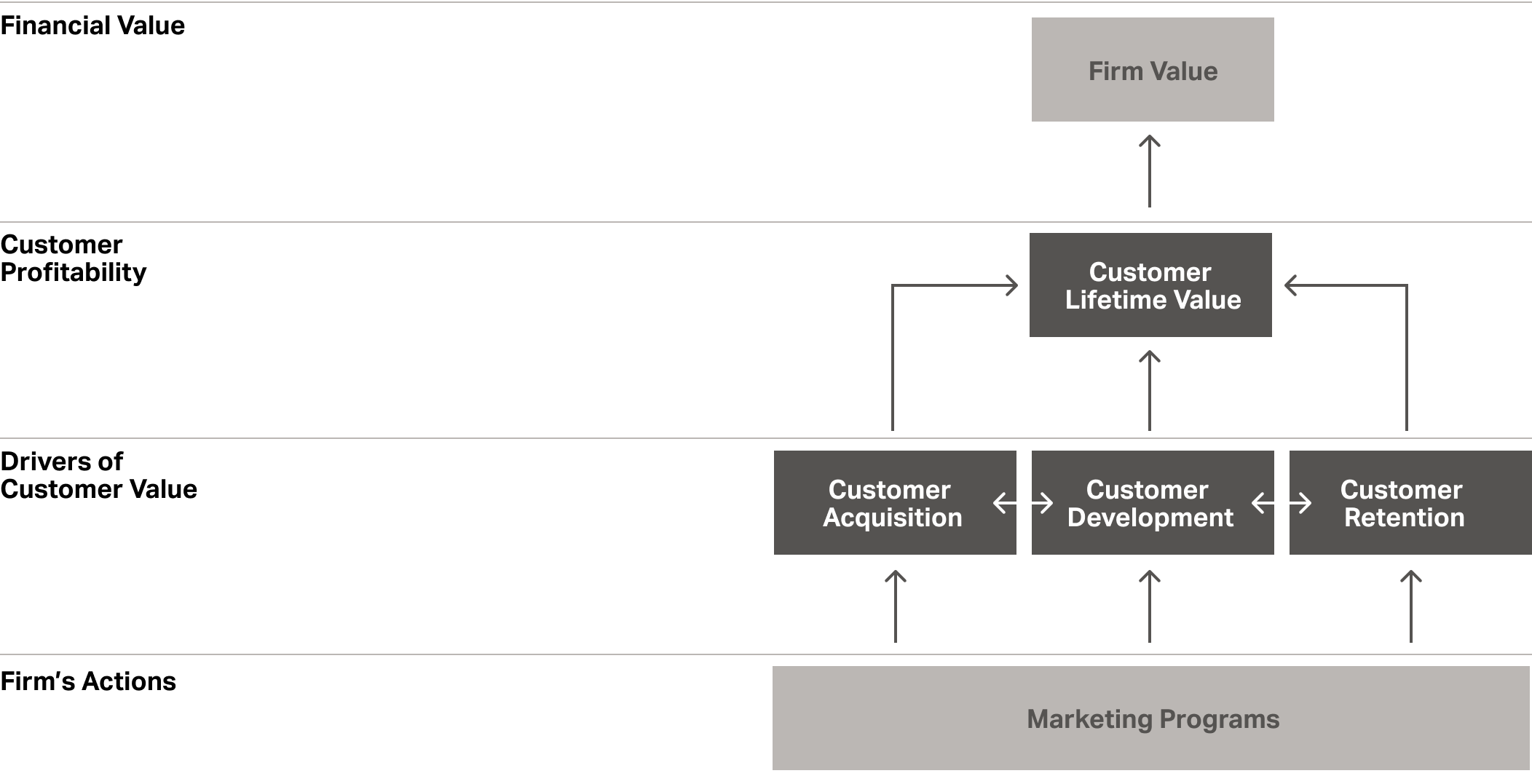
Customer Centricity

Customer
Centricity

Understanding
the Customer

Fostering Customer
Centric Culture

Serving
the Customer

Customer
Intelligence

Internal Competencies
& Values

Product & Service
Portfolio

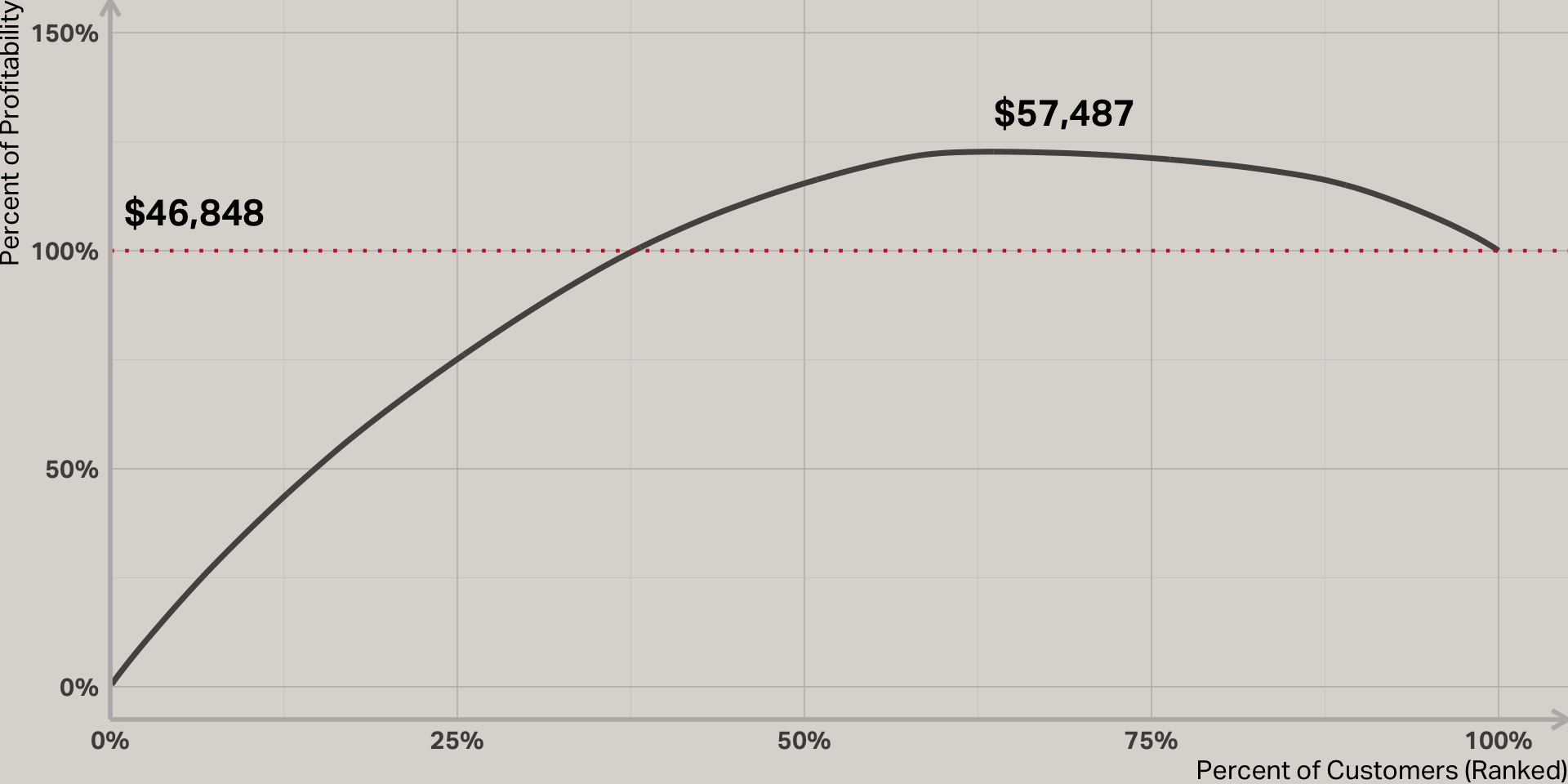
Forget average customers

Back to the whale curve

What would be the most optimal segmentation for Starbucks?

Who’s best?

Betty

  • 2024 Sales: $2,264
  • Visits every day
  • Dines in for ~1 hour
  • Drip coffee & pastry
  • Gives staff birthday cards

Don

  • 2024 Sales: $1,679
  • Visits 3-4x / week
  • Usually w/someone
  • Very specific latte order
  • Successful real estate agent

Joan

  • 2024 Sales: $826
  • Visits 1-2x / week
  • Mostly mobile grab & go
  • Orders seasonal beverages
  • Follows and posts pics

CLV’s parts

Required components

  • Customer profit (Contribution)
  • Retention rate
  • Cost of capital (Discount factor)
  • Customer acquisition cost (CAC)

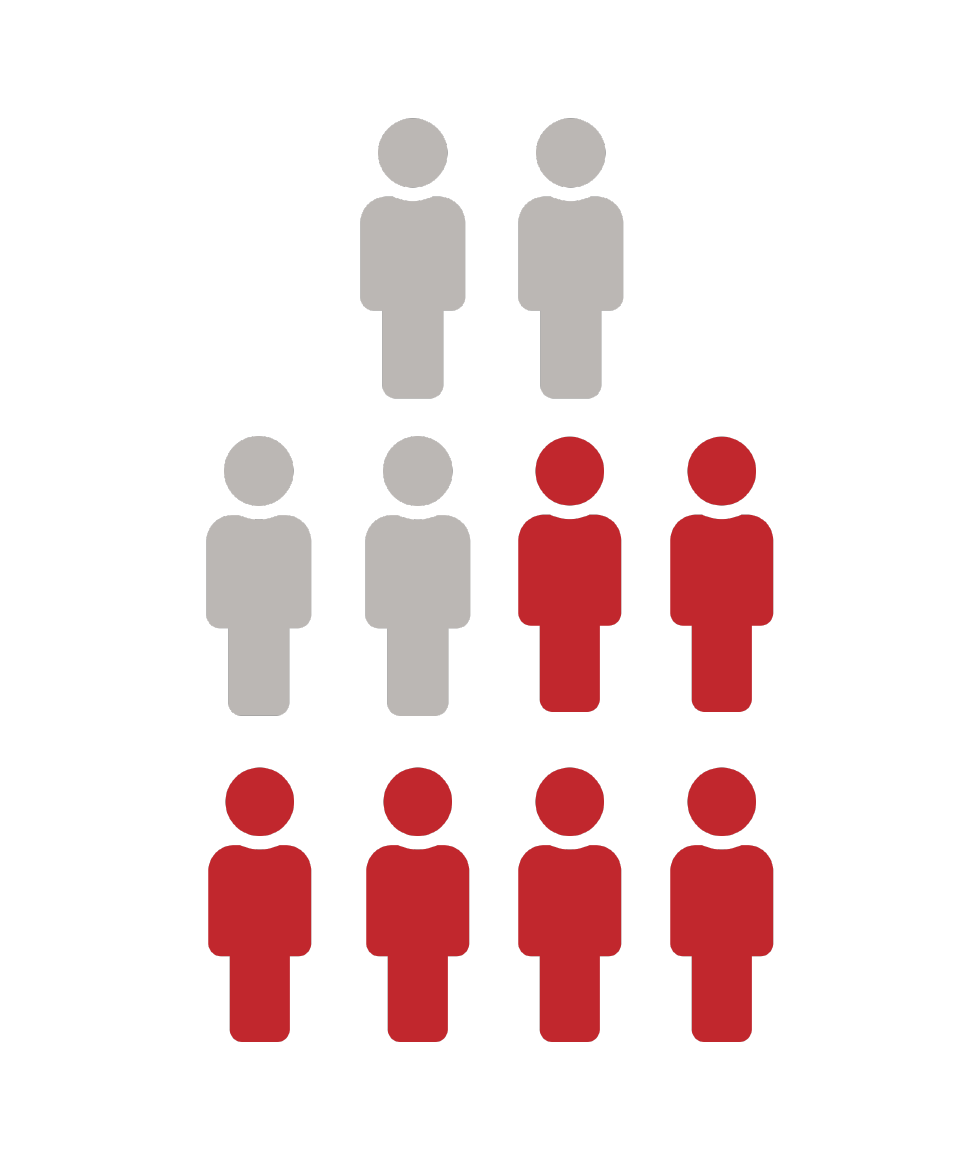
Thinking in cohorts

Year 1


Thinking in cohorts

Year 1

Year 2
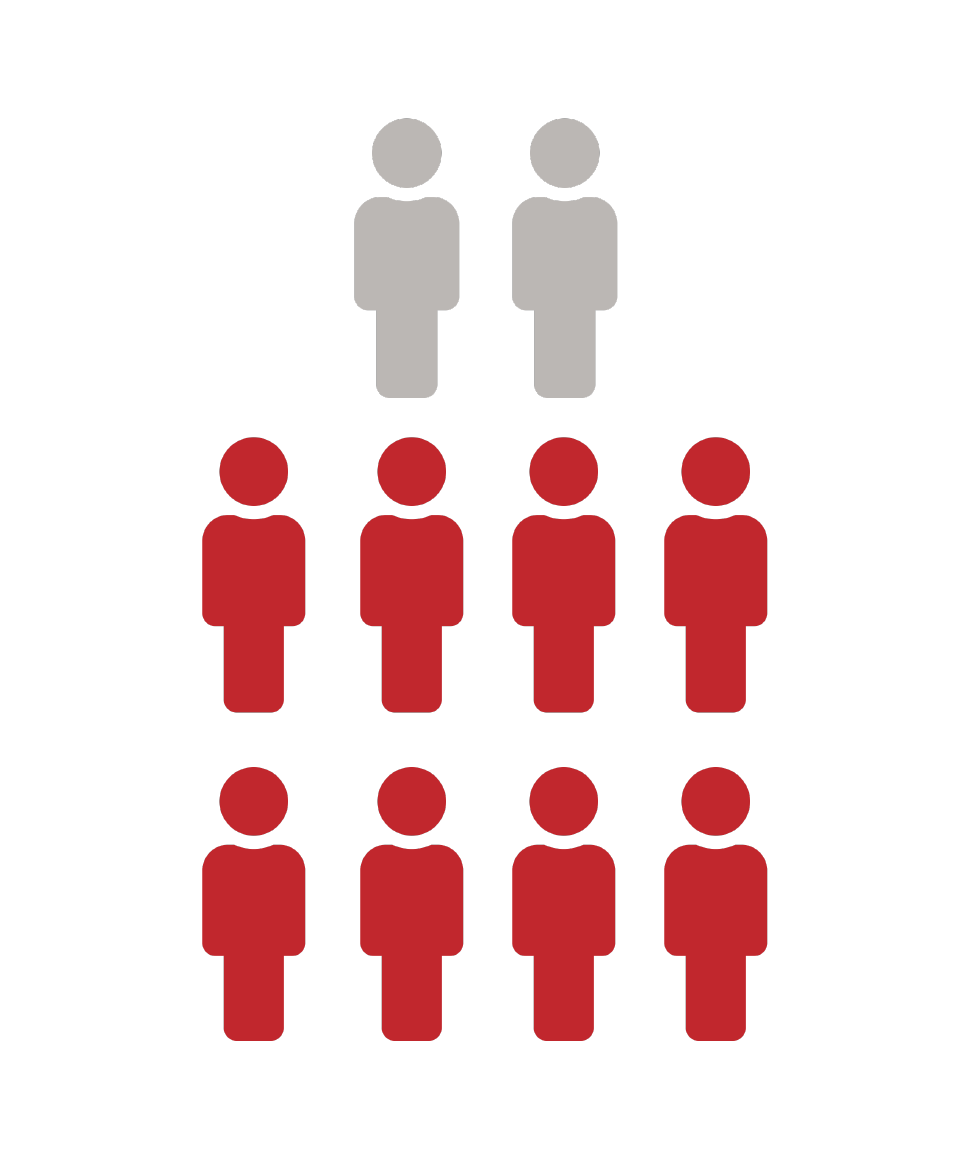
 

Thinking in cohorts

Year 1

Year 2

Year 3
Retention and churn
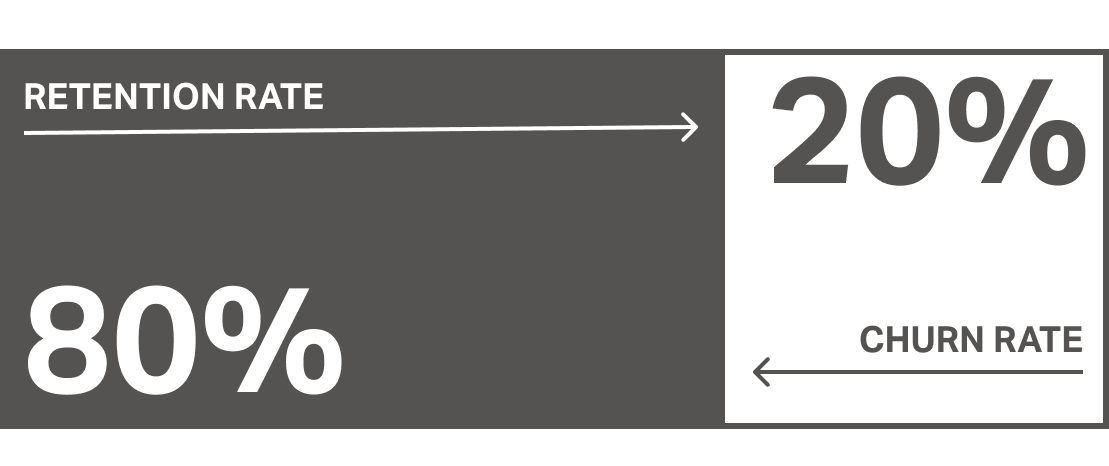
Retention mechanics
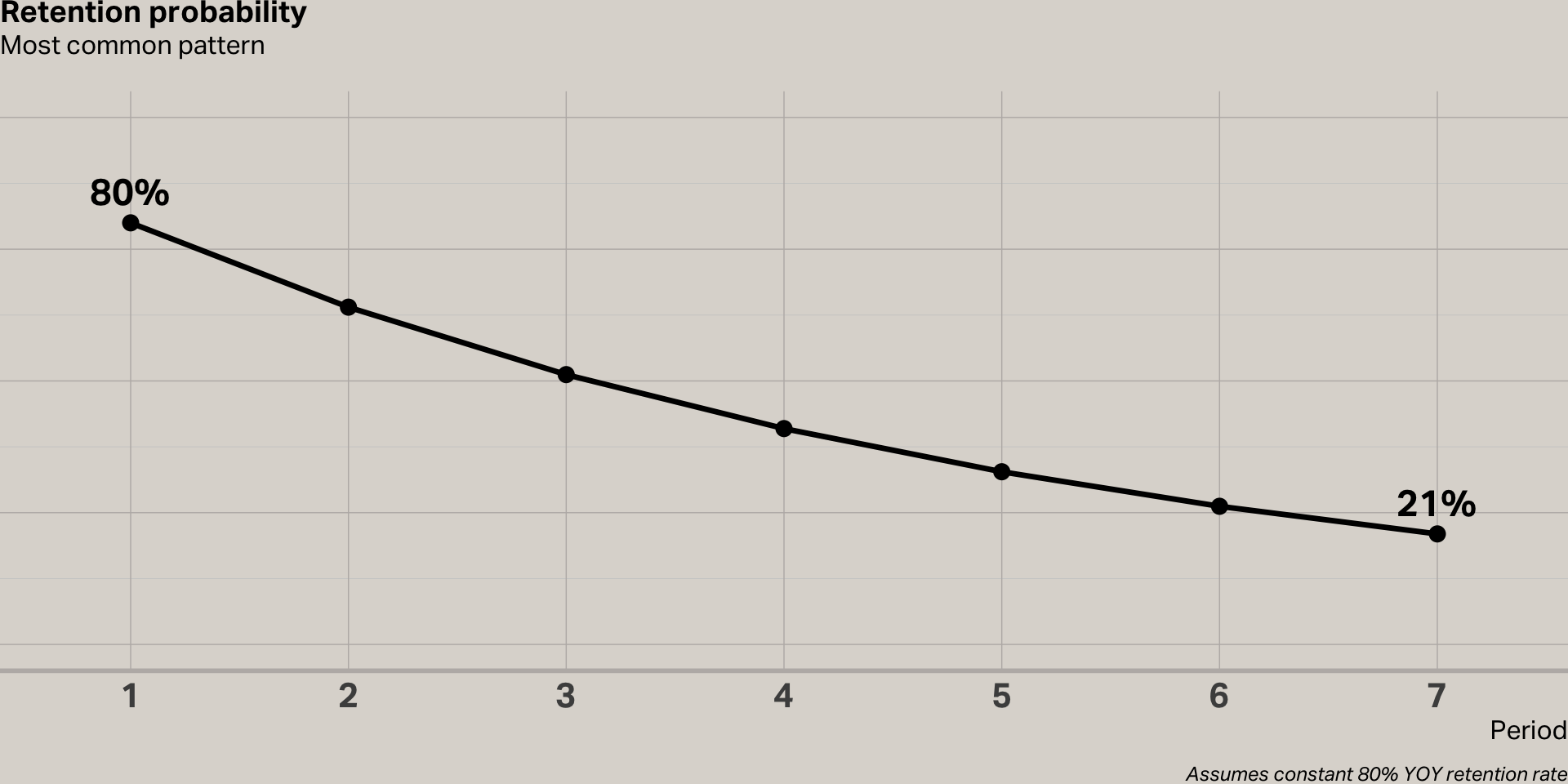
Calculating lifetime

How long should we expect to keep a customer in a cohort that averages an 80% monthly retention rate?

Calculating lifetime

How long should we expect to keep a customer in a cohort that averages an 80% monthly retention rate?

How much is this customer worth?

A company has a customer that generates $100 contribution each month. The monthly churn rate is 20%. What is the CLV of this customer?
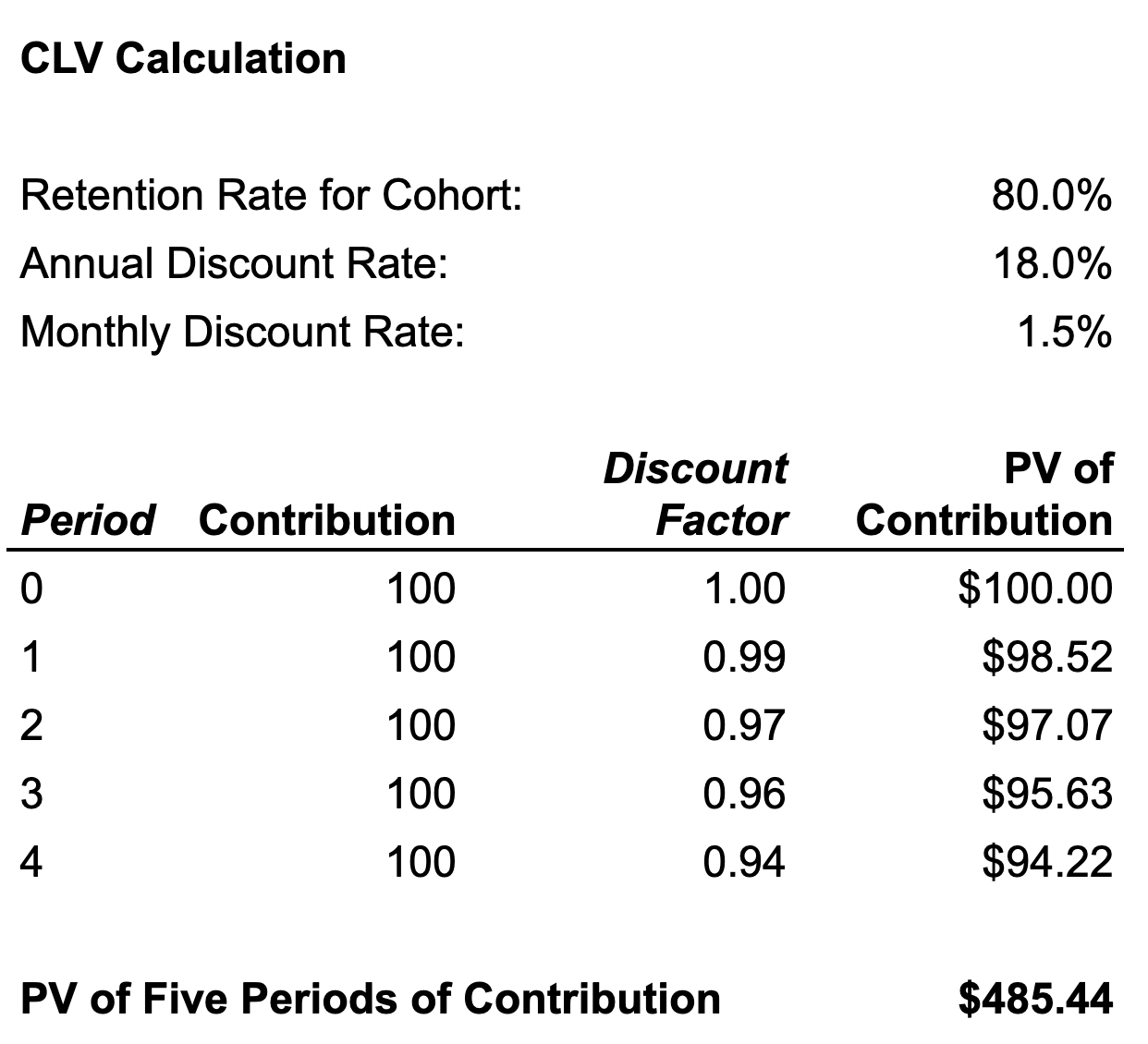
 

Money isn’t free.

How much is this customer worth?

A company has a customer that generates $100 contribution each month. The monthly churn rate is 20%. What is the CLV of this customer?

Hands-on
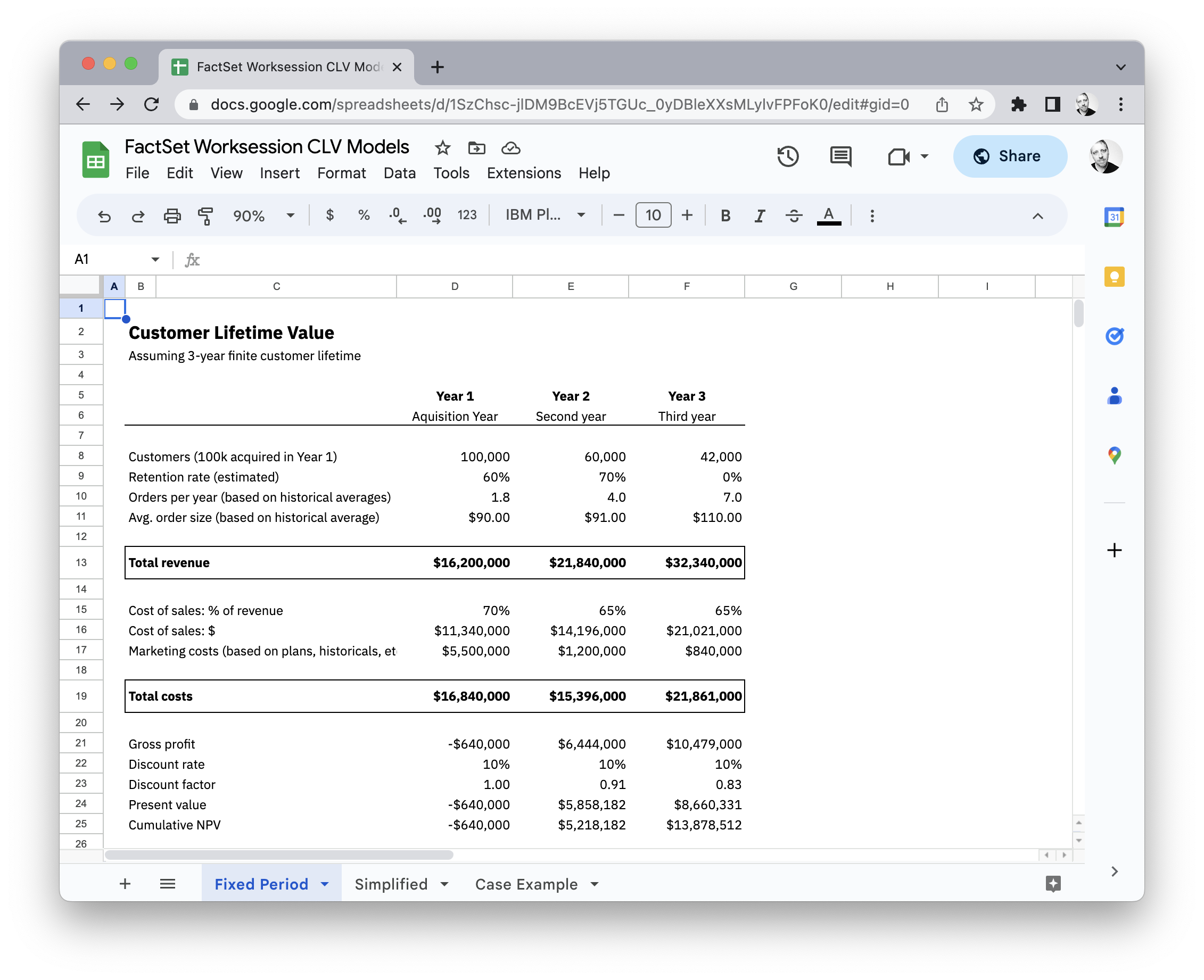
A simpler solution

CLV simplified

Required assumptions

  • Constant contribution average
  • Constant retention rate
  • Constant discount rate
  • Value estimated over infinite time horizon

Simplification

Approaches

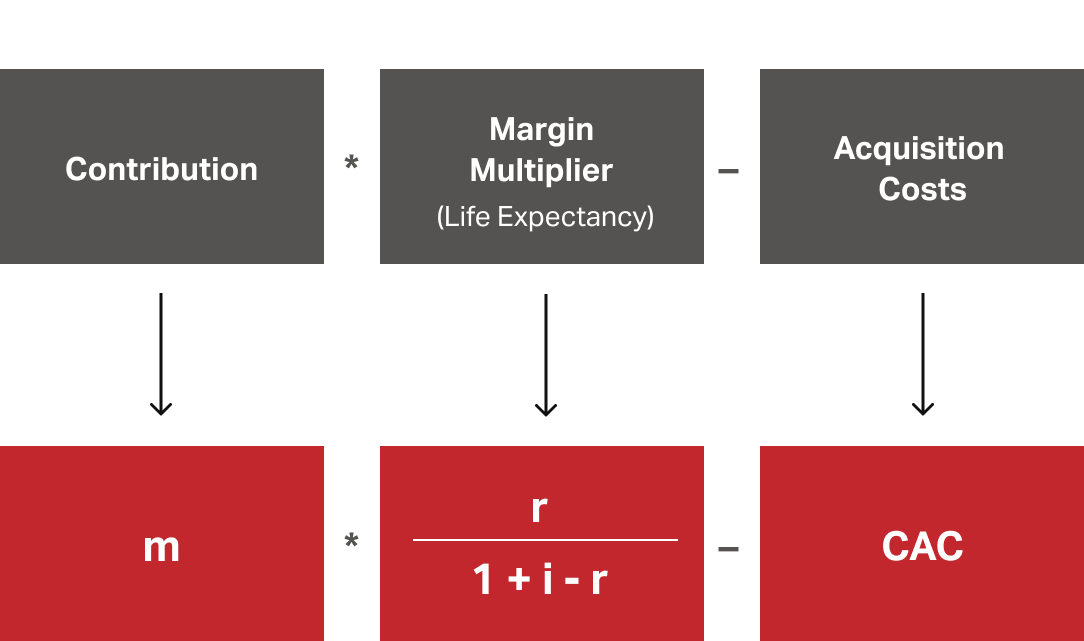
Base method

\[ \text{CLV} = m * \left(\frac{r}{1 + i - r}\right) \]

\[ m = \text{Contribution}\\ r = \text{Retention Rate}\\ i = \text{Discount Rate} \]

Alternate method

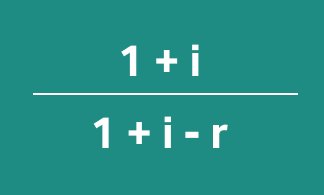
\[ \text{CLV} = m * \left(\frac{1 + i}{1 + i - r}\right) \]

\[ m = \text{Contribution}\\ r = \text{Retention Rate}\\ i = \text{Discount Rate} \]

Hands-on

When to use

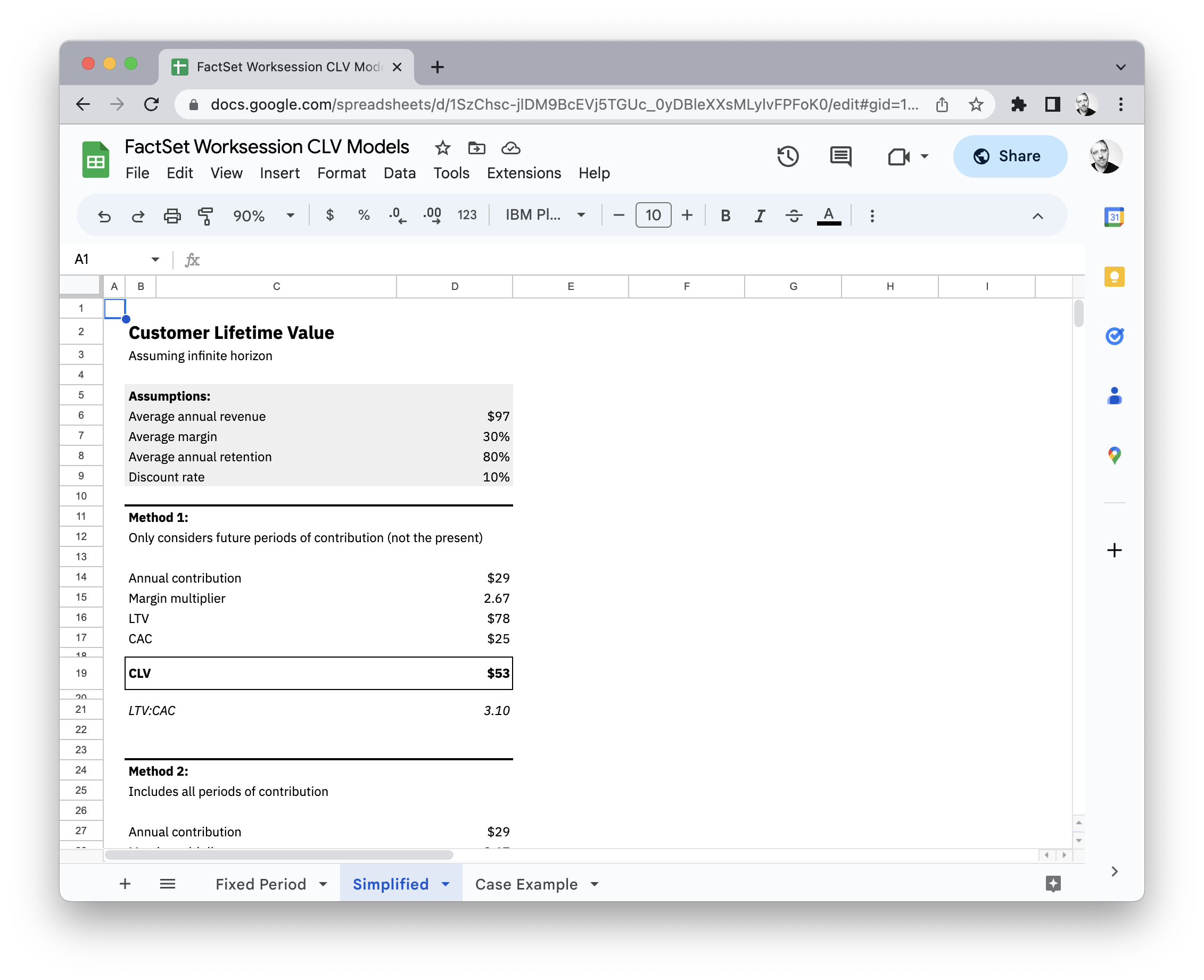
Exclude present period
of contribution
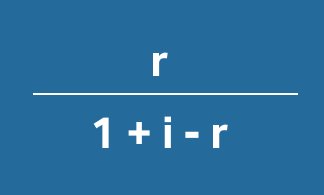
Include all periods
of contribution
Acquisition costs

  • Acquisition costs should only be deducted for new customers acquired in the forecast period
  • Don’t deduct legacy acquisition costs for existing customers
  • Ratios of LTV to CAC are used widely to manage costs and evaluate acquisition investments

Ratios

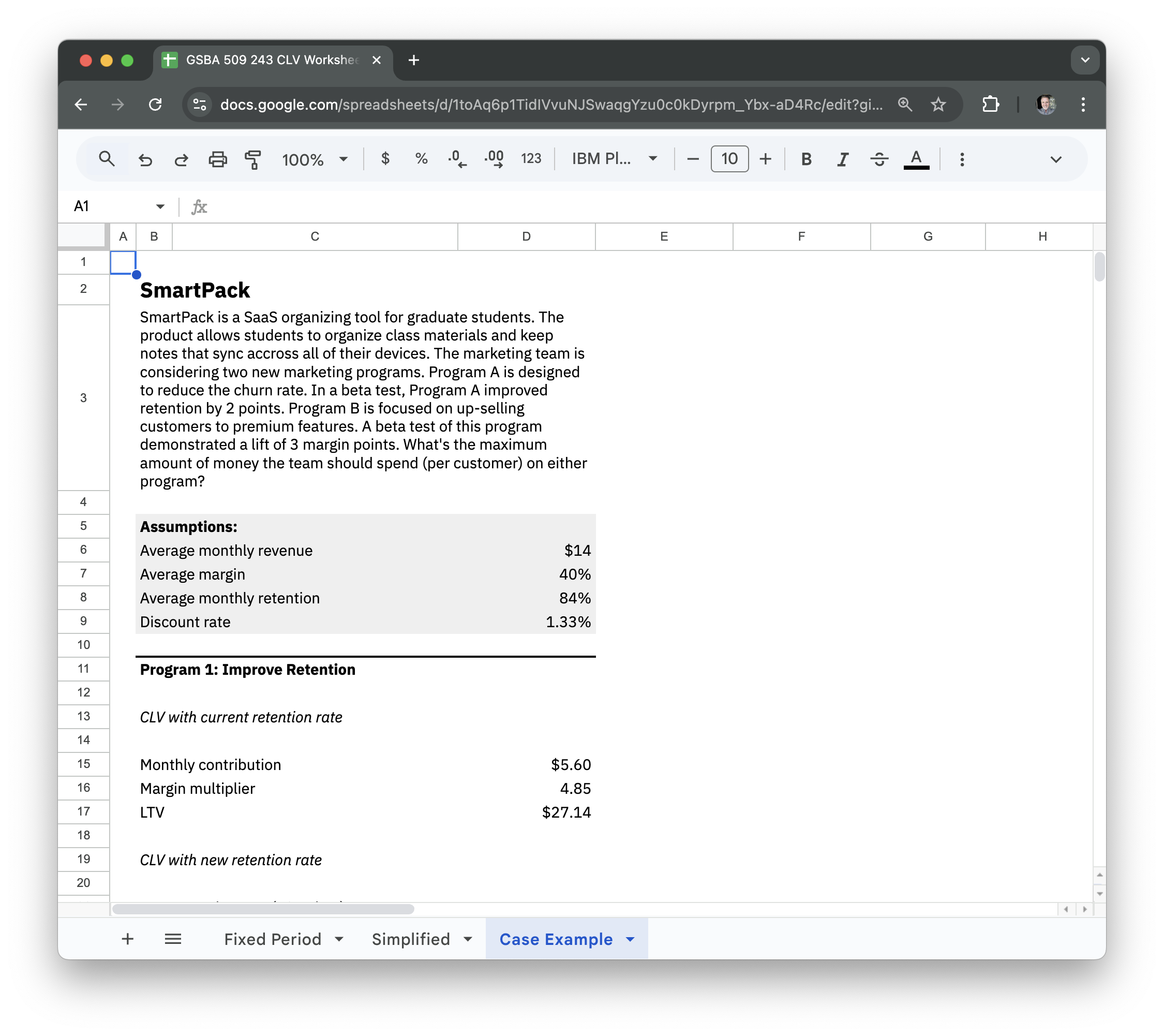
Delta analysis

Hands-on

Delta analysis

Key takeaways

Theory

  • Estimates the total contribution of a customer throughout their lifetime of business with the firm
  • Sensitive to fluctuations in period-over-period contribution and churn rates
  • Expressed in present value of all future cash flows

Practice

  • Simplified CLV model is good for quick decisions, but has limitations when there is significant variance in core components
  • Delta analysis and LTV/CAC ratios are a good guide for investments
  • Estimates have a shelf life; CLV is not static. It can be influenced by managerial decisions.